
"Cocoa River"
400 article(s) found

Introduction to Galapagos Coffee with unique aroma of Ecuadorian Coffee Manor
West coast: including coastal plains and foothills, high in the east and low in the west, generally below 200 meters above sea level, with some hills and low mountains at an altitude of 600 to 700 meters. Belongs to the tropical rain forest climate, the southernmost end begins to transition to the savanna climate. The average annual precipitation decreases from more than 3000 mm to about 500mm from north to south. Central Mountains: the Andes enter Ecuador from Colombia

A brief introduction to the Market Price of Fine Coffee Bean varieties in Hasunda Manor of the Equatorial country
Ecuador is one of the few countries in South America that produces both Arabica coffee and Robbins coffee. However, as the land suitable for Arabica coffee trees is decreasing, the production of Robbins coffee is gradually increasing. The best Arabica coffee comes from the Andes, especially the Chanchagu Valley (ChanchamgoValley), which is divided into two mountains from the south.

Nicaragua coffee plantations with refined flavors Flavors Taste Variety Introduction
Columbus sailed here in 1502 and reached the east coast of Nicaragua. In 1522, Spanish colonists began conquering the area. In 1524 the cities of Granada and Leon were founded. From then on, Nicaragua became a Spanish colony and was placed under the jurisdiction of the Governor General of Guatemala. León became a political and cultural centre; Granada became a commercial and agricultural centre. In the late colonial period,

Classification of coffee by the National Standard for Coffee Botany
There are more than 60 types of coffee, but there are roughly two types of coffee grown on a commercial scale, one is Arabica, accounting for about 70% of the world's coffee planting area; one is Robasta, accounting for about 30% of the world's coffee planting area. According to the classification of coffee by China's national standards, it is mainly divided into the following five varieties. 1. Arabica coffee, i.e. Arabian species. origin

How to brew AA TOP Asalia coffee in Kenya's Sika region?
Professional coffee knowledge exchange More coffee bean information Please pay attention to coffee workshop (Weixin Official Accounts cafe_style) Summer is coming, I want to drink some sour and sweet coffee, so Xiaobian plans to share with you today what kind of flavor this bean will have when brewing [Kenya asali] with different appliances ~| Bean information [Kenya asali] Producing area: Ken

Yunnan coffee Yunnan small grain coffee Yunnan boutique coffee
Yunnan small-grain coffee in China is a beverage crop with high economic value, which is called the three largest beverages in the world together with cocoa and tea, and its output and consumption ranks first among the three beverages. Coffee is rich in protein, fat, sucrose, starch, glucose, caffeine and other substances, rich aroma and delicious taste. Coffee is a perennial evergreen shrub of the genus Coffee of Rubiaceae or Xiao Qiao.

The results of cup test on grinding degree and roasting degree of fine coffee beans from Ecuador's Hasenda coffee garden
ES coffee is a clean organic coffee grown on the slopes of the Latin American Andes. It is 100% pure coffee, and the quality of our coffee has been safeguarded and enhanced through efforts to improve the economic and working conditions of the plantations, while maintaining the small-scale coffee plantations and the diversity of the organisms in the gardens. In addition, it is one of the most important economic sources of coffee origin.

Basic knowledge of fine coffee basic knowledge of coffee botany
According to the botanical description of coffee: coffee is Rubiaceae, coffee genus, perennial evergreen shrubs or small trees. There are more than 60 types of coffee classified, but there are roughly two varieties of coffee grown commercially on a large scale, one is Arabica, accounting for about 70 percent of the world's coffee planting area, and the other is Robasta, accounting for about 30 percent of the world's coffee planting area. According to our country

French Cafe
In France, cafes of different styles and sizes, streets and trees can be seen everywhere attached to buildings.

What style of Italian coffee beans is better to match? introduction to Inza washing method
Professional barista communication please follow the coffee workshop (Wechat official account cafe_style) Columbia coffee Cauca Inza washing method (Colombia Cauca Inza Washed) production area: Inza raw bean treatment: washing treatment coffee varieties: Bourbon, Caturra, Typica, Variedad Colombia appearance: .6dramp 300grgrM15 + screen

A brief introduction to the treatment method of Grinding degree and Baking degree of Fine Coffee beans in fragrant Hasunda Coffee Manor
However, as the land suitable for Arabica coffee trees is decreasing, the production of Robbins coffee is gradually increasing. The best Arabica coffee comes from the Andes, especially the Chanchagu Valley (ChanchamgoValley). The Andes are divided into two mountains, extending from south to north to the Galapagos Islands in central Ecuador, located in the Pacific Ocean, off the coast of Ecuador.

Tanzanian coffee flavor Tanzanian coffee characteristics Tanzanian coffee flavor
Tanzanian coffee, produced in the rich soil of the East African Rift Valley, is an outstanding representative of high-quality coffee from the region. Its refreshing acidity and medium mellowness complement sweet citrus and floral aromas. This coffee tastes great whether it's a hot drink or iced coffee. With oranges or berries, it can show its bright flavor. Tanzanian coffee belongs to Central / East Africa Water washing (Wet method)

Taste mellow Mexican coffee flavor Taste Manor characteristics Fine coffee beans Introduction
Water transportation, especially sea transportation, has undertaken the task of transporting some goods, domestic goods and outbound passengers in Mexico. According to the statistics of the national port system, from January to December 2013, the national freight container load reached 288 million tons of cargo, an increase of 1.6% year-on-year. Among them, the deadweight of oil and oil derivatives alone reached 122 million tons, accounting for 42.5% of the total cargo volume.

Introduction to the description of Coffee Tree species and Flavor in Laminita Coffee Manor
For the exchange of professional baristas, please follow the coffee workshop (Wechat official account cafe_style) Raminita La Minita Laminita is an international coffee export company, named after Hacienda La Minita Raminita Manor, Costa Rica's flagship estate in Tarazhu. In addition to Costa Rica's flagship estate, Raminita also offers raw coffee beans from all over the world. Lamy.

An introduction to the History of growing Coffee beans in Angola
Following Cafe (official Wechat account vdailycom) found that coffee revenue was once one of the main sources of revenue for the Angolan treasury, and coffee production provided a large number of jobs in the country. Before the independence of Angola, coffee growers produced 5000 tons of coffee beans per year. In order to increase coffee production, the country needs to provide more production tools,

Introduction to the characteristics of high-quality coffee beans in the flavor and taste producing area of Hassanda Coffee Garden in Ecuador
Port Guayaquil is the largest seaport in Ecuador. It faces the Pacific Ocean and backs against Mount Santa Ana. The nearby island of Pune serves as a natural barrier to protect the harbour from storms. There is a wharf in the south, which is more than 900 meters long. Ships from different parts of the world flying various flags are moored in the harbor. The port railway leads to the capital Quito, and highways connect Quito with other cities in the country.

Comparison of coffee producing areas in Kenya | what is the difference between coffee in Neri, Muraya and Sika?
Coincidentally, I recently got a batch of beans from Kenya, they come from different producing areas of Kenya, so the flavor will be very different? We baked the oven separately for cup test and comparison, and today the editor would like to share the results of the comparison with you! | there are three production areas compared this time: Nyeri and Thika.

Exploring the secrets of South American coffee inspires summer inspiration
Push open the R-marked wooden doorknob and walk into the quiet space with the aroma of coffee, which is not difficult to keep the heart away from the hustle and bustle and impetuous feeling. On a sticky and impetuous summer day, sitting in front of the hand bar at Starbucks Chart: a book, a cup of hand, a couple of stories and face-to-face communication with the coffee master is enough for me to reap a lazy and fulfilling afternoon. Approach the bar, on the stage

A brief introduction to the planting Market Price of Fine Coffee Bean varieties in the fragrant Hassanda Coffee Manor
The Ecuadorian national flag is rectangular, with a ratio of length to width at 2:1. The flag is made up of three rectangles connected by yellow, blue and red. Yellow occupies 1 quarter of the flag, while red and blue each account for 4. The national emblem is painted in the central government. Yellow symbolizes the wealth, sunshine and food of the country; blue symbolizes the blue sky, the sea and the magnificent Amazon; and red symbolizes the blood of patriots fighting for freedom and justice. Ecuador implements the general manager.
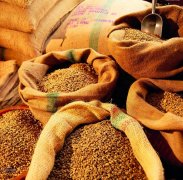
The knowledge of coffee botany is mainly divided into the following five varieties
According to the botanical description of coffee: coffee is Rubiaceae, coffee genus, perennial evergreen shrubs or small trees. There are more than 60 types of coffee classified, but there are roughly two varieties of coffee grown commercially on a large scale, one is Arabica, accounting for about 70 percent of the world's coffee planting area, and the other is Robasta, accounting for about 30 percent of the world's coffee planting area. According to our country